A group of researchers from China and Australia generated and studied the dugong genome
Sirenians of the superorder Afrotheria* are considered to be the first modern mammals to transition from land to water, moreover, they are the only herbivorous marine mammals. The scientists generated a chromosome-level dugong (Dugong dugon) genome and compared their assembly with other afrotherian genomes reveals possible molecular adaptations to aquatic life by sirenians.
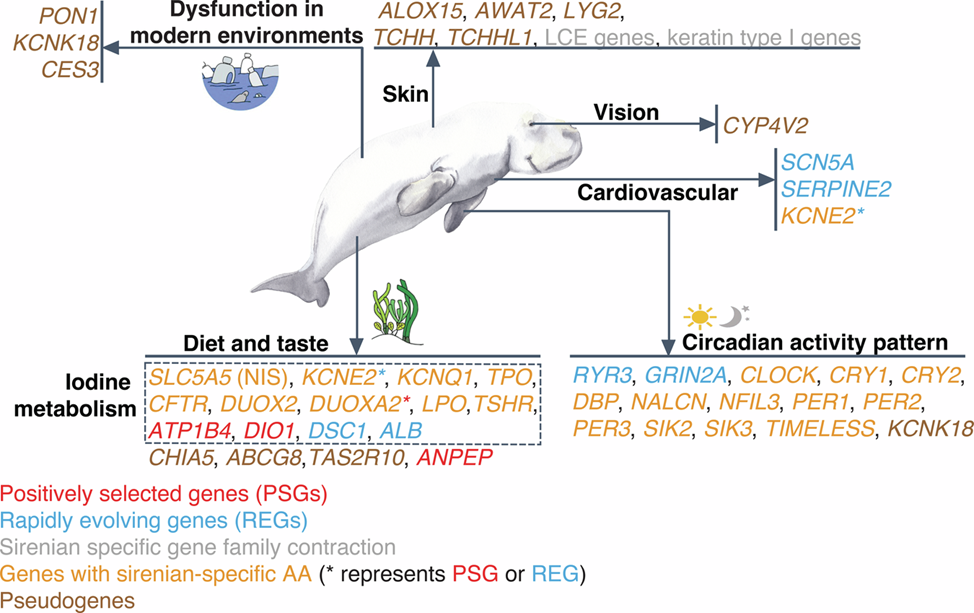
Fig. 1: Genes with unique evolutionary signals in sirenians
 © Nature Communications
 Colleagues found that the loss of dozens of genes re-organized the skin of sirenians and allowed their ancestors to become fully aquatic. Similar gene loss is also seen in cetaceans, but extant sirenians have relatively thin blubber compared to cetaceans and have lost UCP1 gene, which could render them further susceptible to cold temperatures.
In addition, they hypothesized that the loss of the KCNK18 gene reduces the temperature tolerance of sirenians and leads to the manifestation of cold stress syndrome (CSS), a condition resulting from prolonged exposure to water temperatures below 20 °C characterized by multiple physiological changes and comorbidities of unknown genetic cause.
We suppose that restoring some of the genes studied by Chinese and Australian scientists in the upcoming dugong cell editing process will help us obtain specimens capable of adapting to the traditional habitat of the Steller’s sea cow.
Full text of the article see here.
* Afrotheria (Latin, literally: African wild beast) is a branch (in the rank of superorder) of placental mammals, selected as a result of molecular genetic researches. According to molecular data, the oldest Afrotherians came in the Late Cretaceous in Afro-Arabia (Africa with the Arabian Peninsula) during the isolation of the continent from other parts of Gondwana.